Introduction
As children playing with a spinning top, we often imagine it could keep spinning forever. The faster a top spins, the more stable it becomes; even after a collision it can continue rotating. This behavior is due to inertia: a rotating body tends to maintain its motion.
Gyroscopic Torque
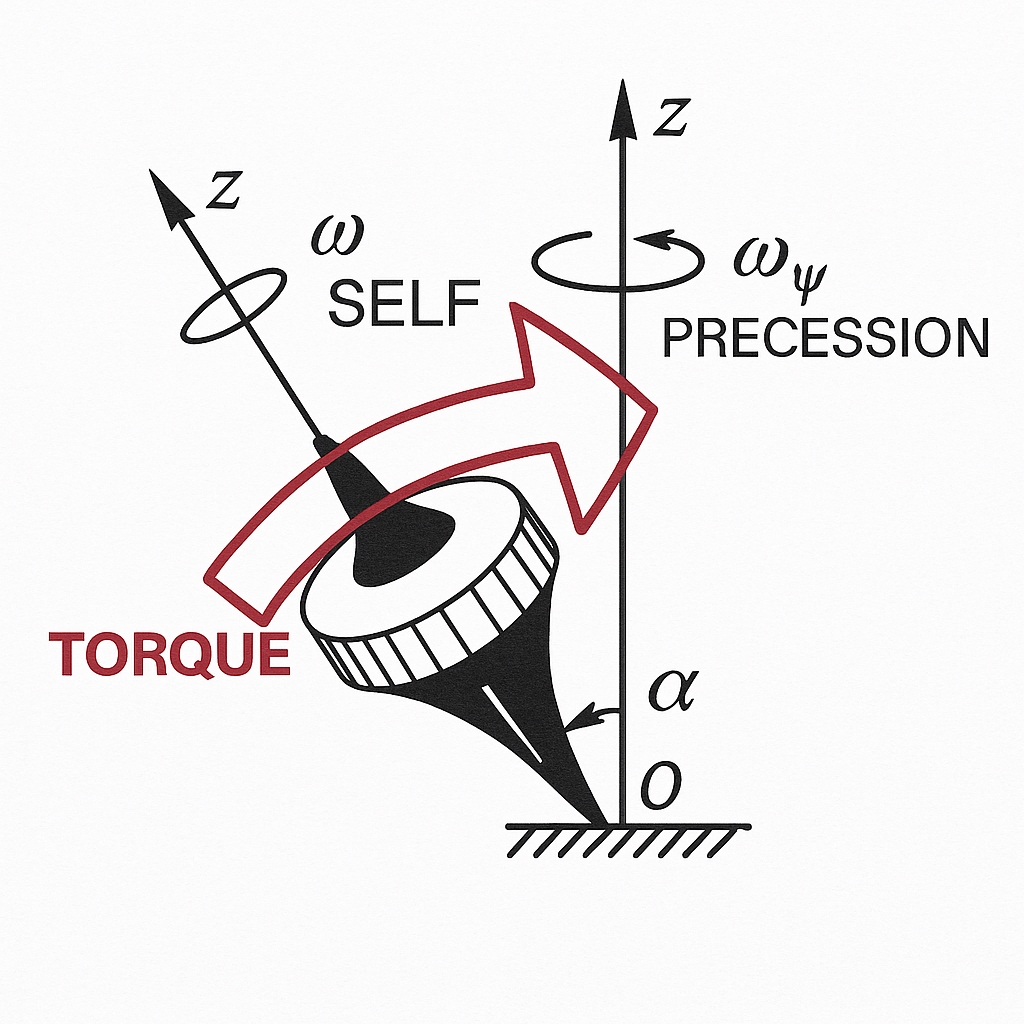
When the axis of a spinning body changes direction, a reactive torque is generated. This is known as gyroscopic torque. The gyroscopic torque depends on the object's spin angular velocity, the precession angular velocity, and its moment of inertia.
By analogy with the Earth orbiting the Sun, the Earth's rotation about its axis occurs concurrently with its revolution. "Precession" can be understood as this change in the orientation of the rotation axis. When the spin axis and the precession axis are at an angle, gyroscopic torque arises.
In an aircraft engine, air is drawn in at the front, compressed in stages, mixed with fuel and burned, driving the turbine to produce thrust.
In earlier twin-rotor engines, the high-pressure rotor and the low-pressure rotor generally rotated in the same direction. Beginning in the 1980s and 1990s, designers increasingly configured the two rotors to rotate in opposite directions.
Rotors can spin at tens of thousands of revolutions per minute. Whether the high-pressure rotor and the low-pressure rotor rotate in the same direction or in opposite directions leads to different gyroscopic effects.
For engines with co-rotating rotors, the gyroscopic torques of the two rotors add. If the high-pressure and low-pressure rotors rotate in opposite directions, their gyroscopic torques oppose each other and partially cancel. This reduction in net torque transmitted to the airframe can ease aircraft design requirements. This torque interaction is a major difference between co-rotation and counter-rotation.
Rotor Deformation and Dynamics
Rotors are not perfectly rigid. Like a skipping rope, a spinning rotor can flex and develop bending deformations while rotating, effectively "whipping" into a curved shape. In that state the rotor exhibits both spin and precession motions. When the spin axis and the precession axis are at an angle, gyroscopic effects influence the rotor's dynamic behavior.
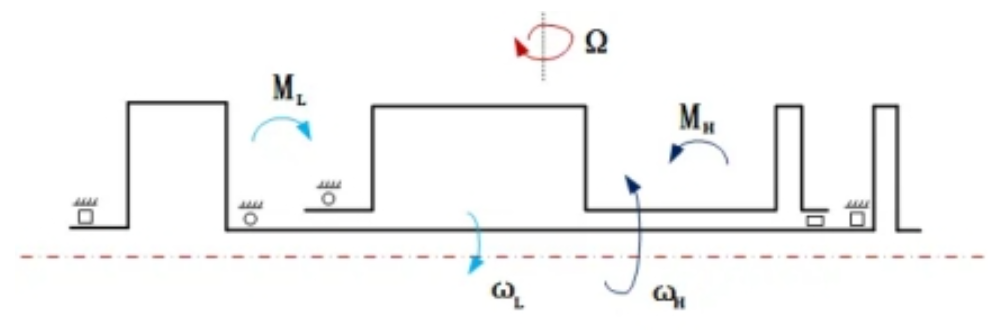
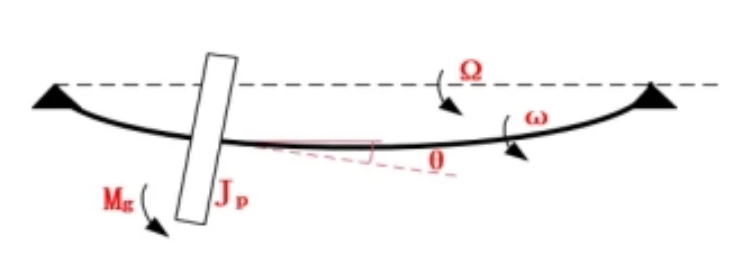
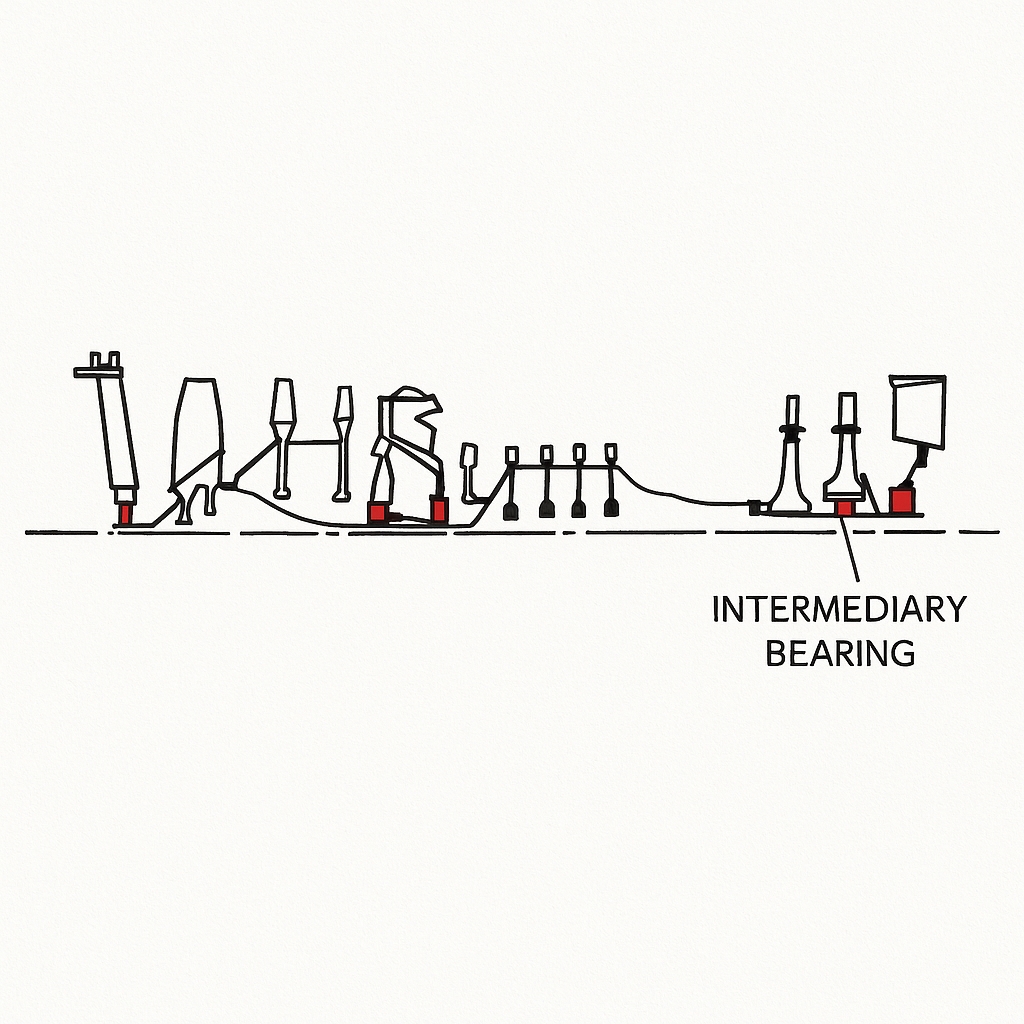
In a twin-rotor system, placing a bearing between the high-pressure and low-pressure rotors alters the stiffness distribution, making deformation patterns more complex and producing more intricate gyroscopic interactions. Design must balance the rotational speeds of the two rotors and their effects on the system dynamics.
Typical Configuration
Design Considerations
Aircraft engine development is a complex, multidisciplinary design process that must account for strength, vibration, aerodynamics, lubrication, sealing, and numerous other interacting factors. Beyond purely mechanical considerations, modern engine control, monitoring, and health management systems increasingly rely on embedded electronics built on high-reliability military PCB platforms, making electronic system integrity a critical part of overall engine performance.
The difference in gyroscopic effects between co-rotating and counter-rotating high- and low-pressure rotors is only one of many influencing factors in engine architecture selection. Each design detail can have wide-ranging consequences, from structural loads to control system response, requiring close collaboration among specialists in mechanical engineering, materials science, aerodynamics, and electronic systems. Robust military PCB design ensures that control electronics, sensors, and data acquisition systems can operate reliably under extreme vibration, temperature, and electromagnetic conditions, enabling experts across disciplines to address core technical challenges and deliver mission-critical strategic equipment.